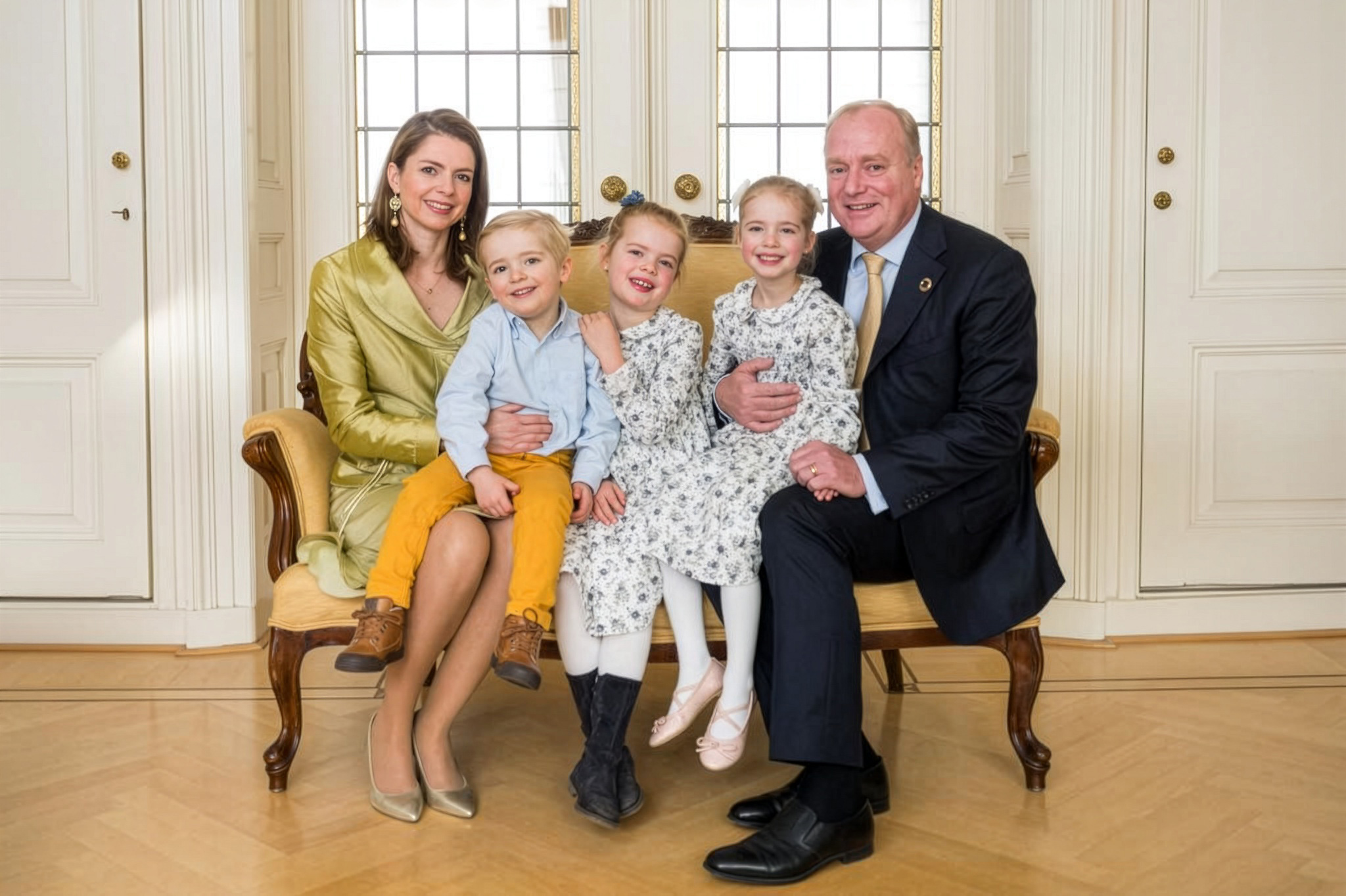
Carlos, Crown Prince of Parma, with the Royal Family
The Royal House
Descendant of the Capetian dynasty, founded by Hugh Capet in 987, the Royal House of Bourbon-Parma is a dynastic institution of royal status founded in 1748 because of the Treaty of Aix-la-Chapelle. France, Britain, and the Netherlands agreed to the return of the Duchies of Parma and Guastalla to King Ferdinand VI of Spain, whose mother Queen Elizabeth, the last descendant of the Farnese had received in 1746. The Duchy of Parma had been created in 1545 by donation from his holy father Pope Paul III to the Farnese family, separating its territory from the Papal States.
King Felipe V, founder of the known as Royal House of Bourbon-Spain, ceded the Dukedom to his second son, Infante Felipe (Filippo I of Parma), who became Duke of Parma and founder of the Royal Family of Bourbon-Parma. Although previously Charles (future Charles III of Spain) briefly held the Duchy of Parma before (between 1731 and 1735) by right of his mother, Filippo I is considered the founder of the House of Bourbon-Parma, as he was the one who consolidated the dynasty in the Duchy independently.
The Royal House of Parma is therefore a branch of the Royal House of Spain that throughout the centuries has ruled the Kingdom of Etruria, the nominal Kingdom of Northern Lusitania, the Duchy of Parma, the Duchy of Piacenza, the Duchy of Guastalla and the Duchy of Lucca.
The current head of the Royal House of Bourbon-Parma, H.R.H. Carlos Javier, is involved in activities in his former states of Italy and in Spain, as well as France and Belgium. The Royal Family of Luxembourg is also part of the Royal Family of Bourbon-Parma. As a branch of the Royal House of Spain, has also succession rights to the crown of that country through his direct and agnatic ancestry from King Felipe V.
Unlike some other formerly reigning dynasties, the Headship of the Royal House has never been questioned by any other branch of the Family. As a sign of transparency and service, H.R.H. Carlos Javier has decided to catalog his family archives so that they can be made accessible to researchers and thus, make the story of the Family more widely known. Focused on preserving the legacy of the Royal House, the members of the Royal Family do not receive income from their dynastic activities, such as admission fees to dynastic orders or appearances at public events.
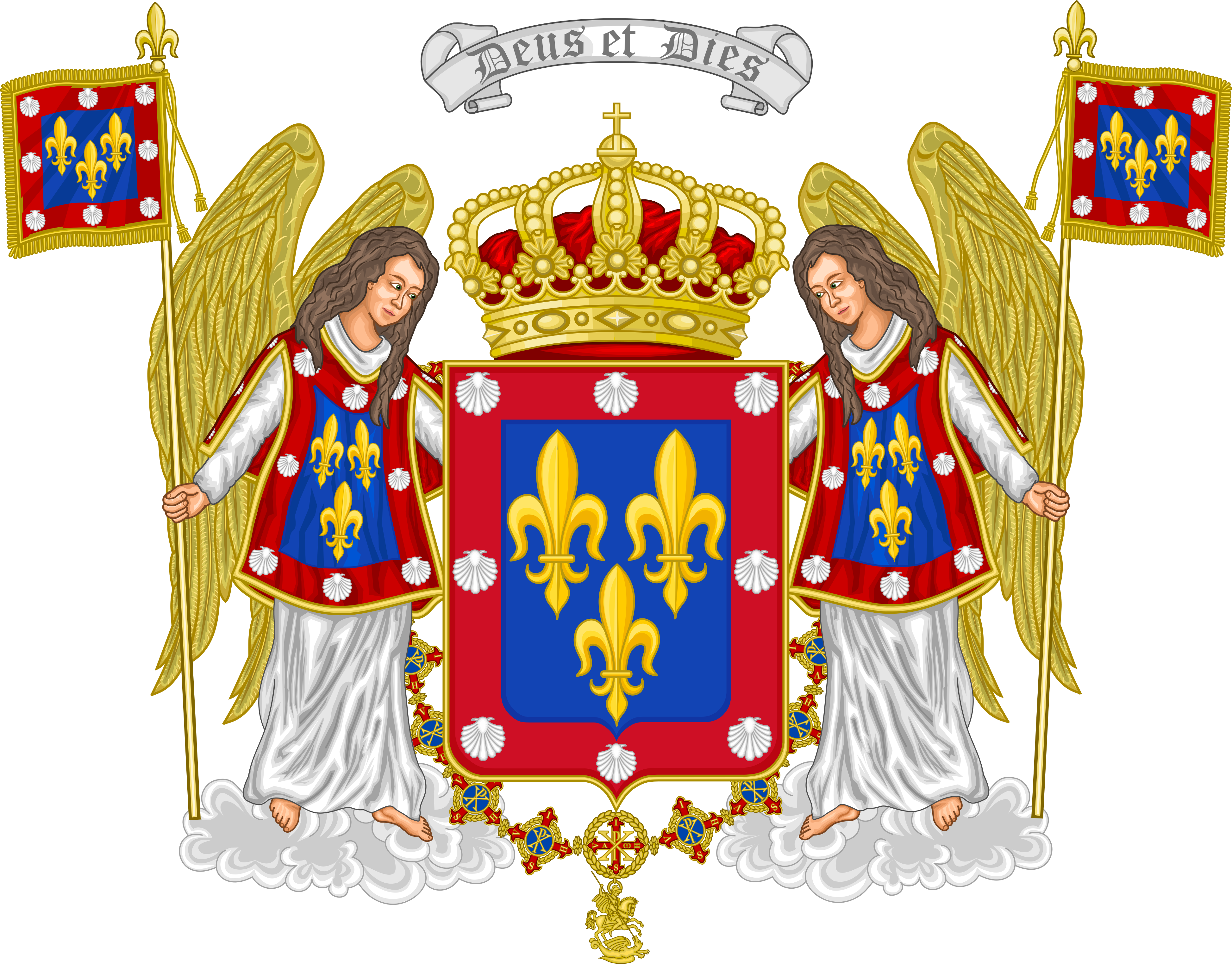
The exercise of this uncontested authority finds further expression in the armorial achievement borne by the Head of the House. The red circlet surrounding the shield is adorned with scallop shells, a distinctive emblem of the Anjou lineage. Such adornment is the exclusive prerogative of the Head of the House, whereas all other Princes of Bourbon-Parma are required to display a narrower red circlet around the shield, unembellished by the scallop shells.
By their own decision, members of the Royal House do not live off memories of other times or their status as descendants of sovereigns, but dedicate themselves to their professional activities, in very diverse fields, to make the values of the Royal House of Bourbon-Parma a reality in today's world and to contribute to building a better society, according to the Catholic identity of the Royal Family since the 9th century.
Nota Bene: This website deliberately uses the Bodoni typeface, by Giambattista Bodoni (1740–1813), the Parmesan typographer whom Duke Ferdinando of Parma appointed Director of the Tipografia Reale di Parma.
The Royal House
of Parma
© 2026 - The Royal House of Parma. All Rights reserved. Powered by PRISMA